

The growing demand for energy and increasing concerns about waste management have encouraged industries to explore more sustainable technologies. Food processing facilities, hotels, restaurants, and manufacturing units generate significant quantities of organic waste every day. Instead of sending this waste to landfills, businesses can explore technologies that convert biodegradable materials into useful energy.
Biomethane production through anaerobic digestion is one such approach. It transforms organic waste into a renewable gaseous fuel that can support industrial energy requirements. When combined with efficient thermal energy systems, this technology creates opportunities for better resource utilization and more sustainable industrial operations.
Businesses exploring food waste to biomethane solutions can turn organic waste into a valuable energy resource while improving waste management practices and reducing dependence on conventional fuels.
Understanding Food Waste-to-Biomethane Technology
Food waste-to-biomethane technology involves processing biodegradable organic materials to produce biogas, which can subsequently be upgraded into biomethane.
Food waste from commercial kitchens, food processing industries, supermarkets, hotels, and agricultural activities can serve as feedstock, provided it meets the system’s processing requirements.
The process primarily uses anaerobic digestion, where microorganisms break down organic matter in an oxygen-free environment. This biological process produces biogas containing methane and carbon dioxide, along with smaller quantities of other gases.
After appropriate purification and upgrading, the methane concentration increases, producing biomethane suitable for specific energy applications.
How Is Food Waste Converted into Biomethane?
The conversion process involves several stages that ensure efficient waste treatment and gas production.
1. Collection and Segregation
Organic waste is collected from suitable sources and separated from plastics, metals, packaging materials, and other contaminants. Proper segregation helps maintain feedstock quality and protects processing equipment.
2. Pre-Treatment of Organic Waste
Collected food waste undergoes preparation processes such as shredding, size reduction, and slurry preparation. This creates a more consistent feedstock for anaerobic digestion.
3. Anaerobic Digestion
The prepared organic material enters an anaerobic digester, where microorganisms break down biodegradable compounds without oxygen. Temperature, retention time, pH, and organic loading are important operating parameters.
4. Biogas Generation
The digestion process produces biogas containing methane, carbon dioxide, and trace impurities. The quantity and composition depend on feedstock characteristics and digester operating conditions.
5. Biogas Upgrading
The raw biogas undergoes purification to remove carbon dioxide, moisture, hydrogen sulphide, and other unwanted components. This increases methane concentration and produces biomethane that meets the requirements of its intended application.
6. Biomethane Utilization
The upgraded biomethane can be used as a fuel for suitable industrial heating applications, power generation, or other approved uses, depending on its quality and the available infrastructure.
The Role of Industrial Boilers in Sustainable Energy Management
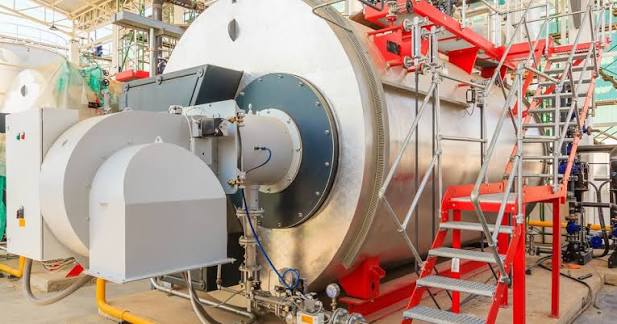
Industrial boilers are essential equipment across manufacturing and processing industries. They generate steam or hot water required for heating, drying, sterilization, cooking, and various production activities.
Industries such as food processing, pharmaceuticals, textiles, chemicals, and paper manufacturing depend on reliable boiler systems to maintain uninterrupted operations.
Modern Industrial Boilers incorporate technologies such as efficient combustion systems, automated controls, improved insulation, and heat recovery equipment. These features help optimize fuel consumption and improve thermal performance.
Where suitable fuel quality, gas pressure, burner compatibility, and safety provisions are available, upgraded biomethane can also be evaluated as an alternative gaseous fuel for compatible boiler systems.
Benefits of Integrating Biomethane with Industrial Energy Systems
Combining organic waste processing with industrial energy management can provide several operational and environmental advantages.
-
Reduced Dependence on Conventional Fuels
Biomethane offers a renewable gaseous fuel option that can supplement conventional energy sources in suitable industrial applications.
-
Improved Organic Waste Management
Converting biodegradable waste into biogas helps divert suitable organic materials from conventional disposal routes and creates opportunities for resource recovery.
-
Better Energy Utilization
Businesses can evaluate their waste generation and energy consumption together, creating opportunities to recover value from materials that would otherwise be discarded.
-
Support for Circular Economy Practices
The process demonstrates how waste from one activity can become a resource for another. Digestate from anaerobic digestion may also be used as a soil amendment when it meets applicable quality and regulatory requirements.
-
Long-Term Sustainability Planning
Integrating renewable gas production into industrial energy strategies can support resource efficiency and reduce reliance on fossil fuels, depending on the overall system design and lifecycle performance.
Industries That Can Benefit from Biomethane Production
Several sectors generate biodegradable waste that can potentially be used for biomethane production.
- Food Processing Industries: Fruit and vegetable residues, food processing leftovers, and other biodegradable by-products.
- Hotels and Restaurants: Kitchen waste, vegetable peels, and discarded food materials.
- Agriculture: Suitable organic residues and biodegradable agricultural waste.
- Dairy Industries: Organic processing residues and suitable biodegradable waste streams.
- Commercial Establishments: Segregated food waste from supermarkets, institutional kitchens, and catering facilities.
The suitability of each waste stream depends on its composition, contamination levels, moisture content, and biodegradability.
Important Considerations Before Implementing a Biomethane Plant
Although biomethane production offers several opportunities, successful implementation requires proper planning.
Businesses should assess daily organic waste availability, feedstock consistency, plant capacity, land requirements, water availability, and expected gas production.
They should also evaluate gas purification requirements, storage arrangements, digestate management, regulatory compliance, and the economics of biomethane utilization.
For industrial applications, the compatibility of the gas with existing burners and boiler systems must be evaluated before integration.
The Future of Renewable Energy in Industrial Operations
The transition towards sustainable manufacturing will increasingly depend on technologies that improve energy efficiency and recover value from waste.
Biomethane production, industrial heat recovery, efficient boiler systems, and renewable energy integration can collectively contribute to more responsible resource management.
As industries focus on reducing operational inefficiencies and improving environmental performance, waste-to-energy technologies are likely to become an important part of long-term sustainability strategies.
Conclusion
Food waste-to-biomethane technology offers industries an opportunity to convert biodegradable waste into a useful renewable energy resource. When integrated with compatible industrial heating systems, it can support improved energy management, responsible waste treatment, and better resource utilization.
Businesses that evaluate their organic waste generation alongside their thermal energy requirements can identify practical opportunities to adopt these technologies. Combining biomethane production with efficient industrial equipment represents a meaningful step towards more sustainable industrial operations.